South East Queensland
Queensland

Queensland
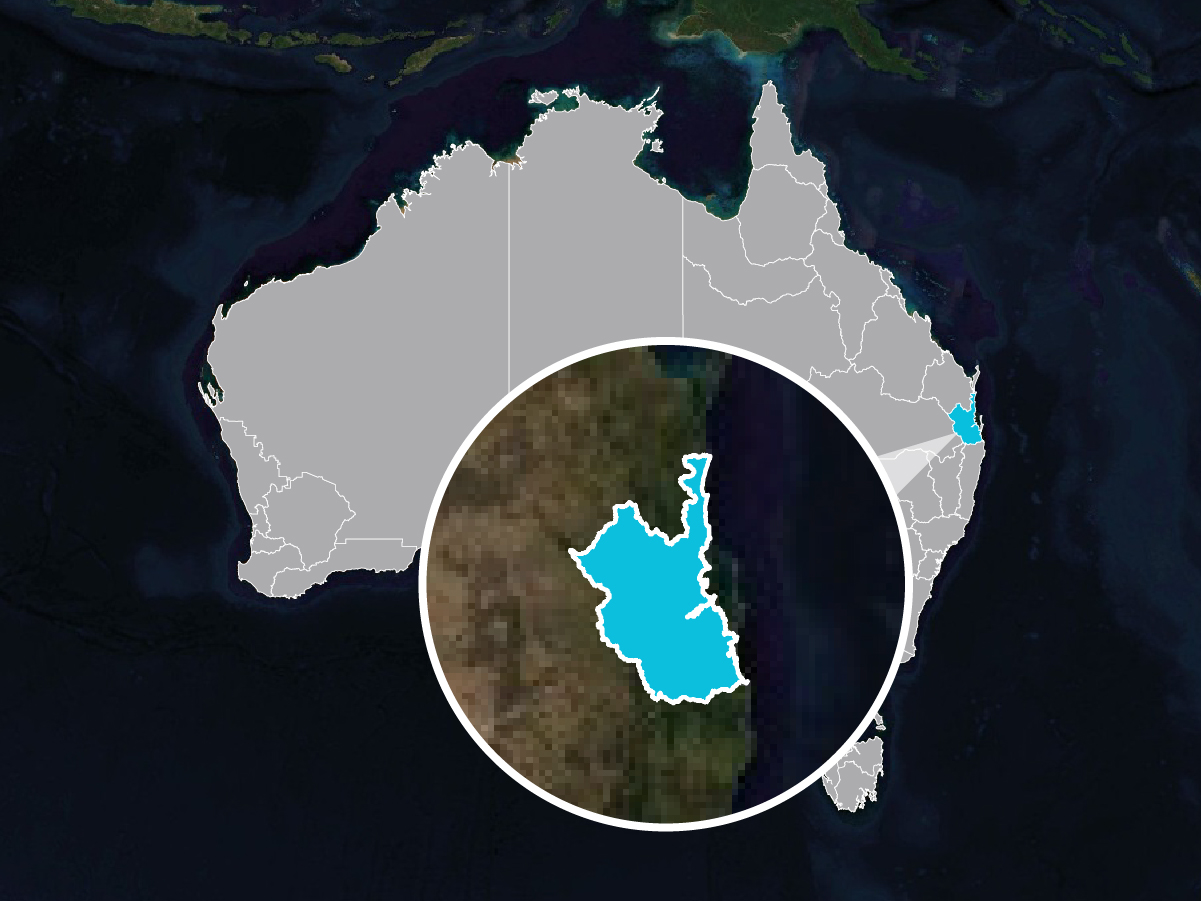
| Location: | South East Queensland coastal from Noosa to Tweed Heads |
| Traditional Owners: | Jinibara, Kabi Kabi (Gubbi Gubbi), Turrbal, Jagera/Yugara, Quandamooka, and Yugambeh peoples |
| Regional body: | Healthy Land and Water |
| Area: | 23,000 (km2) |
| Catchments: | Brisbane River, Bremer River, Logan River, Albert River, Nerang River, Noosa River, Mary River. |
| Population centres: | Brisbane, Noosa, Maroochydoor, Moolooabah, Caloundra, Gympie, Gold Coast |
| Local government areas: | Gold Coast, Scenic Rim, Ipswich, Lockyer Valley, Somerset, Redlands, Moreton Bay, Sunshine Coast, Noosa, Toowoomba |
| Domaint land uses: | Grazing (56%), Conservation (13%), Rural residential (8.4%), Forestry (5.6%) |
The South East Queensland Natural Capital Region covers the coastal catchments in South East Queensland (SEQ) from the Noosa River to the New South Wales border (Tweed Heads) and inland to the Great Dividing Range. The region is home to around 4 million people including major urban centres including the Sunshine Coast, Brisbane and Gold Coast. The region stretches 260km north to south and 160km east to west. The southern and southwestern boundary is the Scenic Rim which combines the sub-tropical rainforests of Main Range and Lamington National Parks. The major rivers of the region (Brisbane, Albert and Logan Rivers) discharge into Moreton Bay. Major dams include Wivenhoe, Somerset, Hinze, and North Pine (Lake Samsonvale).
Dissolved inorganic nitrogen generated
tonnes per year
Fine sediment generated
kilotonnes per year
Woody vegetation cover
square kilometres
Riparian and wetland woody vegetation cover
square kilometres
Explore the current condition in the interactive condition report below – Click on a sub-catchment to view a report on the natural capital measures for that sub-catchment in the ‘report’ tab.
Choose the natural capital measures that are important to you – Select the ‘hotspot’ tab and check the indicators that are important to you. Then view measures that are aggregated and range standardised from the highest to the lowest value across the sub-catchments (red for worst and blue for best). By simultaneously considering multiple natural capital measures you can instantly see where the greatest opportunities for natural capital improvement are.
One of the most common uses of Natural Capital Region is to prioritise what to do and where to do it and to forecast the future natural capital condition under alternative nature repair investment programs.
The rapid scenario creation and running allows for the development of co-operative investment strategies that include the priorities of multiple partners (e.g. NRM organisations, federal government, state government and local government).
To facilitate this rapid scenario generation, Natural Capital Region includes region-specific libraries of tens of possible on-ground actions. Each action includes their effectiveness for improving natural capital outcomes, the cost per hectare of the action and the likelihood of adoption of each action.
To demonstrate, a simple investment scenario is embedded below.
| Budget: | $50,000,000 |
| Area: | All sub-catchments |
| Positive Actions: | Terrestrial and riparian revegetation nature repair and conservation actions (protecting remnant vegetation and native revegetation replanting) |
| Negative Actions: | Do not consider the implications of negative actions (eg. excluding impacts of ongoing clearing or urban expansion) |
| Maximum area per sub-catchment: | Set the maximum area for each action per sub-catchment as 10% of the available area for that action (spread the investment across several actions) |
| Adoption likelihood: | Use likely landholder adoption rates (includes total proportion of landholders and time to achieve adoption) |
| Priorities: | Prioritise based on water quality and biodiversity outcomes and actions that include high First Nations engagement |
Explore the scenario results spatially – Click sub-catchments on the map to see the cost breakdown over time and by sub-catchment.
Explore the marginal cost abatement – This shows where the rate of improvement vs cost starts to flatten off. Hover over the chart to see a breakdown of each suggested action by sub-catchment with the associated co-benefits of the action quantified.
Natural Capital Region forecasts a potential future state by considering alternative on-ground actions. A critical step in this process is compiling the data to establish the baseline condition for the region.
Metadata for the indicators (and groupings used in Action set up) included in the South East Queensland (Queensland) instance of Natural Capital Region have been thoroughly documented.
Access to Natural Capital Region and Natural Capital Impact is curated. To get you started we need to create a group for you. Once created you control membership of your group.
Subscribe to our mailing list for all the latest news and developments about Truii’s Natural Capital Suite.

Natural Capital Suite is a Truii product.
If you are interested in learning more about Truii and viewing their full range of data-driven web applications, follow the link below.